

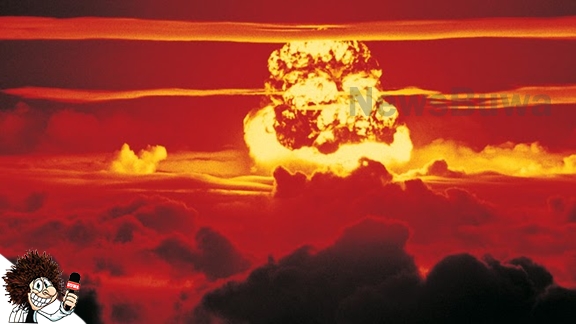
Today, on August 29, 2023, we observe the International Day against Nuclear Tests. This special day was established by the United Nations in 2009 to remind us of the devastating impact of nuclear testing and to promote a world without nuclear weapons.
Nuclear weapons, a destructive force from the 20th century, were predicted by Albert Einstein to be used in the Fourth World War, while he believed the Fifth World War would return to more primitive methods. As the creator of the atomic bomb, Einstein foresaw the destruction it could bring. Since the first nuclear test on July 16, 1945, over 2,000 tests have been conducted. Initially, little thought was given to the harmful effects on people and the environment. Over time, the tragic consequences of these tests became clear, especially as newer, more powerful weapons were developed.
There are two types of nuclear bombs: atomic and thermonuclear. The atomic bomb, like the Fat Man and Little Boy dropped on Hiroshima and Nagasaki, uses nuclear fission. These areas are still radioactive today. The other type is the thermonuclear bomb, also known as a hydrogen bomb.
This day is chosen to remember the closure of the Semipalatinsk Nuclear Test Site in Kazakhstan on August 29, 1991. This site saw over 450 nuclear tests and became one of the most contaminated places on Earth. Closing it was a major step towards a world without nuclear weapons.
The history of nuclear testing began with the US detonating the first atomic bomb on July 16, 1945. This paved the way for using nuclear weapons against Japan. The US and the Soviet Union engaged in a nuclear arms race after World War II, conducting hundreds of tests. The worst period was the 1960s, when over 100 tests were carried out annually by both countries.
Nuclear tests had dire effects. Radioactive fallout harmed the environment and people’s health. Fear of nuclear war spread. In 1963, the US, Soviet Union, and UK signed the Partial Test Ban Treaty, limiting tests in certain environments. But underground tests continued.
In 1996, the Comprehensive Nuclear-Test-Ban Treaty (CTBT) aimed to ban all nuclear explosions, yet not all nations ratified it. Some, like India and Pakistan, still test nuclear weapons.
Nuclear tests cause long-lasting damage to humans and the environment. Radioactive fallout leads to cancer, birth defects, and genetic disorders. High radiation exposure causes acute sickness, while nuclear fallout contaminates areas for years, affecting food and water. Nuclear tests can even trigger earthquakes and tsunamis.
The biggest test was the Soviet Union’s Tsar Bomba in 1961, 1,500 times more powerful than Hiroshima’s bomb.
The International Day against Nuclear Tests reminds us of victims, educates about nuclear dangers, and calls for disarmament. The UN Secretary-General urges the world to eliminate nuclear weapons, highlighting their existential threat.
While fears of clandestine nuclear tests exist, advancements in tracking technology help monitor compliance. The CTBTO plays a role. Despite challenges, public advocacy on this day pressures for ratifying the CTBT and ending nuclear testing.
Let’s work together for a world free of nuclear tests and the dangers they bring.


