

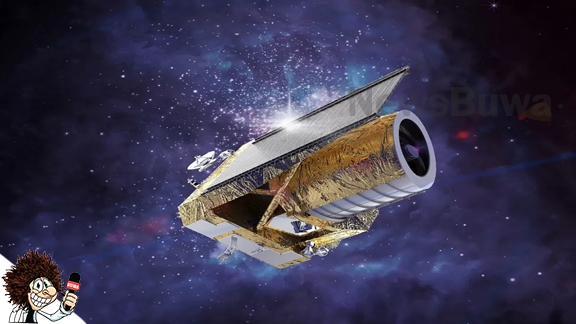
Europe’s Euclid telescope is embarking on a mission to unravel the Universe’s most profound mysteries. The space observatory has showcased its exceptional imaging capabilities. Over the next six years, Euclid will survey a significant portion of the cosmos to shed light on enigmatic entities known as dark matter and dark energy.
These elusive forces seemingly shape the Universe’s structure and expansion, constituting a substantial 95% of cosmic contents. However, they remain undetectable, requiring us to discern their subtle influences on observable phenomena.
Euclid’s mission involves observing the shapes, distances, and movements of billions of galaxies, some of whose light has traveled nearly the entire age of the Universe to reach us. Within this colossal 3D cosmic map, scientists hope to uncover answers to these cosmic riddles.
Horsehead Nebula

Perseus Cluster

NGC 6397

NGC 6822

The Euclid telescope, with a budget of €1.4 billion, was launched in July and has undergone fine-tuning by engineers. Early challenges included difficulties in stabilizing images due to issues with the fine guidance sensor software and problems with stray light contaminating images when the observatory was pointed in specific directions.
However, these issues have now been successfully resolved, leading to the release of five sample images. Professor Isobel Hook, a member of a team that discovered the Universe’s accelerating expansion in the 1990s, expressed excitement and relief, stating that the images exceeded expectations and praised Euclid’s performance.
SOURCE – BBC