

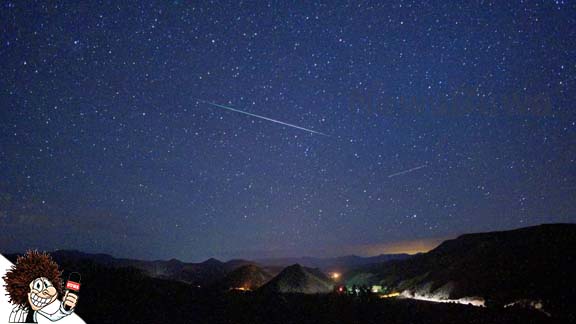
Get ready to witness one of the most mesmerizing sights in the night sky – the Perseid meteor shower.
Picture this: shooting stars streaking across the heavens, leaving trails of light and color in their wake. It’s an astronomical spectacle that’s absolutely worth the wait.
Marked as the finest meteor shower of the year, the Perseids are at their peak during mid-August. This celestial show runs from July 14th to September 1st, gracing various parts of the world with its brilliance. Imagine up to 100 meteors lighting up the sky every hour during the peak, hurtling at an incredible speed of 59 km per second.
Named after the mythical figure Perseus, these meteors seem to originate from the constellation of the same name. The Perseids are renowned for their swift, luminous nature, often painting long trails of light behind them.
The best part? You can spot around 50 to 100 meteors per hour during this show, provided the summer nights are clear and inviting.
Keep an eye out for fireballs too – these dazzling bursts of light and color linger longer than the average meteor. What causes them? Larger particles from comets create these breathtaking explosions. They shine brighter than most, with magnitudes greater than -3.
Picture this celestial choreography: comets leave behind trails of dust as they loop around the Sun. Earth, in its yearly journey, crosses paths with these dusty trails. The outcome? These tiny particles collide with our atmosphere, creating a fiery dance of colors in the night sky.
This year, NASA’s All Sky Fireball Network captured the first Perseid meteor on July 26. The meteor shower reaches its peak overnight on Saturday, August 12, into the early hours of Sunday, August 13.
And guess what? If you’re reading this on the right day, you’re in luck. The Planetarium of Sri Lanka suggests that tonight is the perfect opportunity to catch this celestial show. Around 1 a.m., look towards the northeast horizon in the constellation of Perseus. You don’t need any special equipment – just your eyes and a good spot away from city lights. Give your eyes about 30 minutes to adjust to the dark for the best view.
Don’t fret if you miss out this year. The Perseids will grace our skies once more in July and August of 2024.
So, if you’re a true astronomy enthusiast, tonight is your night.
Get ready to be dazzled!