

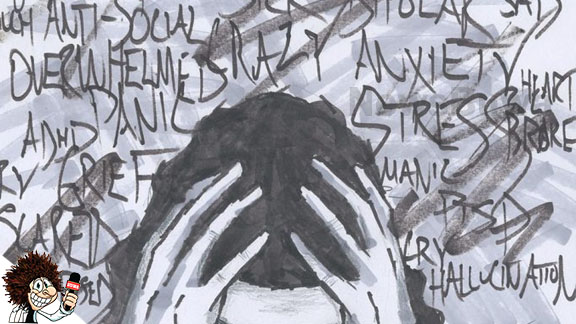
You may have been hearing word “depression” at least ten times in an average day. Even though “depression” is such a commonly used term, people who have a proper understanding of this topic are rarer. Thereupon let’s try to understand some essentials about “depression”. A long time ago, when something traumatic happened to someone, and when that person was murmuring the same thing and acting odd, people used to call it an effect of Satan or the devil. However, with the developments in science and medicine, scientists found this as a treatable mental disorder. Thus, that person with such odd befavouritehom others called prey of Satan was sick.
So what causes depression?
It is often said that depression results from a chemical imbalance. However, research suggests that depression doesn’t spring from simply having too much or too little of certain brain chemicals. There are many possible causes of depression by the brain, genetic vulnerability, and stressful life events. It is believed that several of these forces interact to bring on depression.
Before we take a look at symptoms, we will understand the types of depression.
1. Major depressive disorder / clinical depression
In this episode, you may have trouble doing day-to-day activities, and sometimes you may feel as if life isn’t worth living. Your mind may fill with feelings of sadness, tearfulness, emptiness, or hopelessness. You will get frcounsellingven over small matters. Loss of interest in most or all normal activities such as sex, hobbies, or sports.
2. Bipolar disorder / manic depression
This is a condition that causes extreme mood swings that include emotional highs (mania or hypomania) and lows. Moreover, people with this condition may feel happier when someone is sad, and on the opposite, they will feel sad when someone is happy. Some people with this syndrome will gain happiness by hurting others. For example, they will hurt their partners to gain satisfaction in sexual activities.
3. Psychosis
Having moments of psychosis means experiencing delusions and hallucinations. They almost always reflect the person’s deeply depressed mood. A person with this condition might hear, feel, smell, see, or taste things that are not there. Hearing voices is a common hallucination.
4. Postpartum depression (PPD)
PPD is a mental condition that many women get after delivering their baby. It is strong feelings of sadness, anxiety, and tiredness that last for a long time after giving birth. Although PPD can happen any time after childbirth it often starts within 1 to 3 weeks of having a baby.
You must remember there are many categories under each of these conditions. Since writing all of them makes the article kind of boring, I will share the most important things which you need to know in short.
How you can identify “depression”? What are the symptoms of it?
• Feeling sadness, tearfulness, emptiness or hopelessness
• Angry outbursts, irritability or frustration, even our small matters
• Loss of interest or pleaser in most or normal activities such as sex, hobbies or sports
• Sleep disturbances, including insomnia or sleeping too much
• Tiredness and lack of energy
• Reduced appetite and weight loss or increased cravings for food and weight gain
• Anxiety, agitation and restlessness
• Slowed thinking, speaking and body movements
• Trouble thinking, concentrating, making decisions, and remembering things
• Frequent or recurrent thoughts of death, suicidal thoughts, suicide attempts, or suicide
• Feeling worthlessness or guilt, fixating on past failures or self-blame
According to research, an estimated 3.8% of the population, including 5% among adults and 5.7% among adults older than 60 years are affected by depression worldwide. The decline of the neurons, as well as the social and economic issues, like getting apart from their children, lack of money, and poor health, are the main identified reasons for depression in adults over 60 years old.
Let me share some symptoms which will help you to notice any sign of depression in your adults.
• Waking up early more than their usual time
• Ignoring their appearance and not poor personal hygiene
• They find their favourite music, and hobbies uninteresting and prefer to spend more time alone.
• Lack of concentration and sensation
If you notice these signs or any signs which make you suspicious about depression, the best thing is to consult a doctor and seek medical advice.
In your life, if you are undergoing any kind of serious problem which keep disturbing you, collect yourself and share it with your family or one of your close friends. Even if you feel your parents do not know anything about life in the 21st century, go talk with them about the matter. With time you will understand how correct they were about life. If you cannot find any trustworthy person to share your problem with, feel free to contact me. I will try my best to help you.
Even though my parents are still unaware of the fact that I have studied psychology counselling for a long time, I believe that I can help you with what I have learned and experienced so far.
If you ever felt alone, depressed, and busted, do not hesitate to visit the below link and contact me. I will listen to you!
SIRISOMA (@siri_soma) • Instagram photos and videos
Oops… it has been a long article than I expected. So let me finish this for the time being. If you have learned something from this, that’s my happiness. Until we meet next time, stay safe and happy!
Dhanujaya Rathnayaka